


 87 / 162

Single Window Systems
In the OIC Member States
77
where devoted to training users from these state agencies as well as from the business
community.
The Single Window strategy and business strategy as well as the organizational structure also
remained unchanged since 2009, but TULPAR received an additional mandate for export
promotion in 2014.
The limitation of the design became apparent when the Single Window was launched. AS-IS
processes where simply automated without a process simplification and re-engineering. A
second phase of development was therefore launched to undertake the re-engineering of
business processes and legal revision framework. This second phase will result in a matrix of
requirements for a new IT system, to be implemented in a third phase.
TULPAR relies on outsourcing of key activities. A third party developed the pilot project, the
design and development of the IT system was outsourced to a third party through a tender,
and the current second phase is also outsourced to a third party.
4.2.2
Single Window Scope and Scale
The Single Window was designed to act as a one-stop shop for trade transactions, namely
import and export licenses and authorizations. At the time of the Single Window development,
few administrations in the Kyrgyz Republic were using IT and the objective was to enable
electronic processing and the digitisation of documents for these agencies.
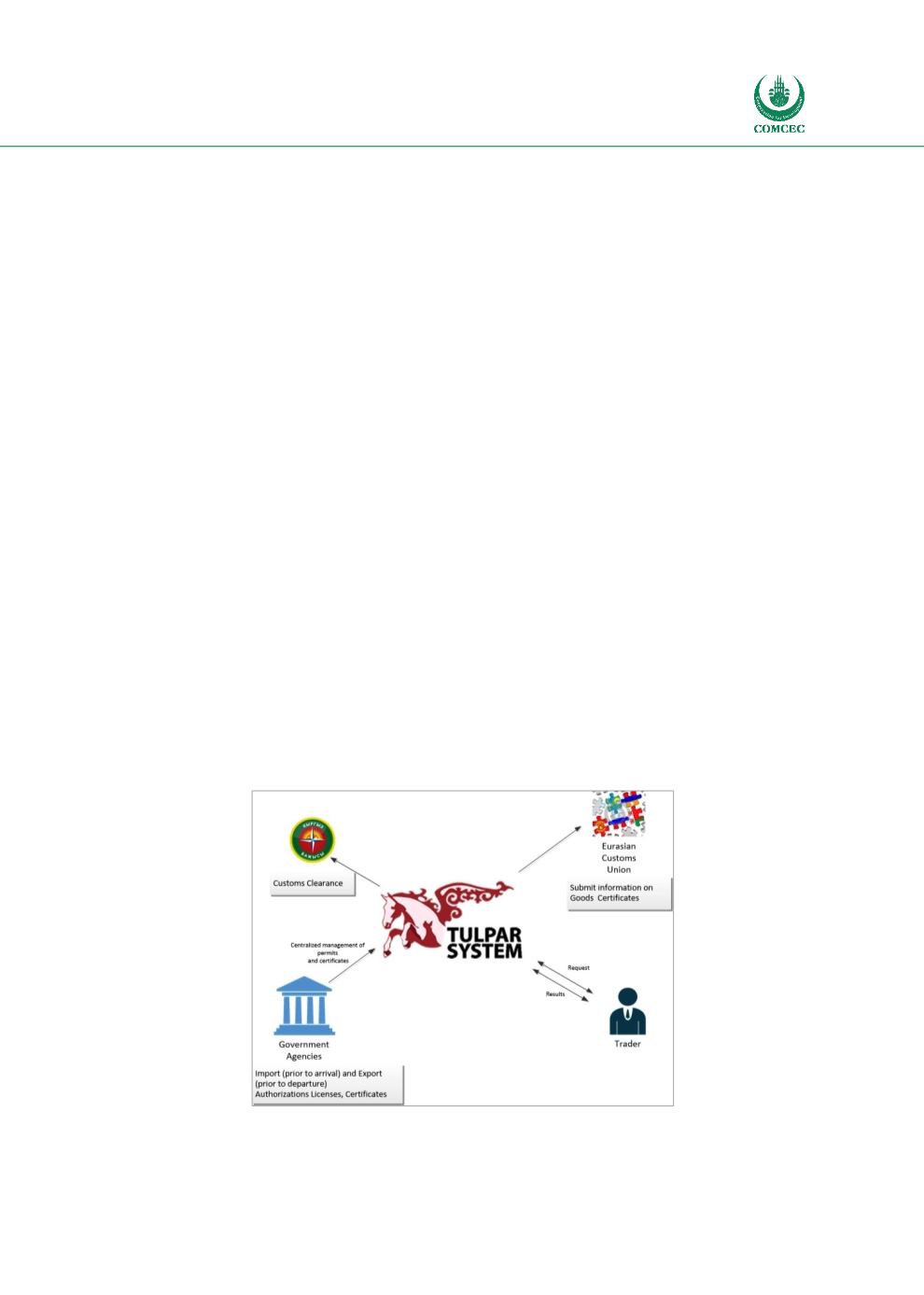
In line with its strategy, the SW provides functionalities and services for the processing of
authorizations, certifications and licenses prior to arrival or departure of goods – see the
conceptual diagram i
n Figure 25below.
Figure 25: TULPAR Conceptual Diagram
Source: Authors’ own construction