



 31 / 162

Single Window Systems
In the OIC Member States
21
A gradual implementation also offers advantages for overcoming resistance from stakeholders.
A Single Window project starts with selected committed stakeholders and later extends to
other stakeholders.
1.4.2
Implementation Steps
The Single Window implementation process is a succession of different steps necessary to
mobilize political support and stakeholders, to undertake the preparatory assessments, to
design and plan the future system, to develop and deployment the IT system, and to manage
the change and build the performance capacity.
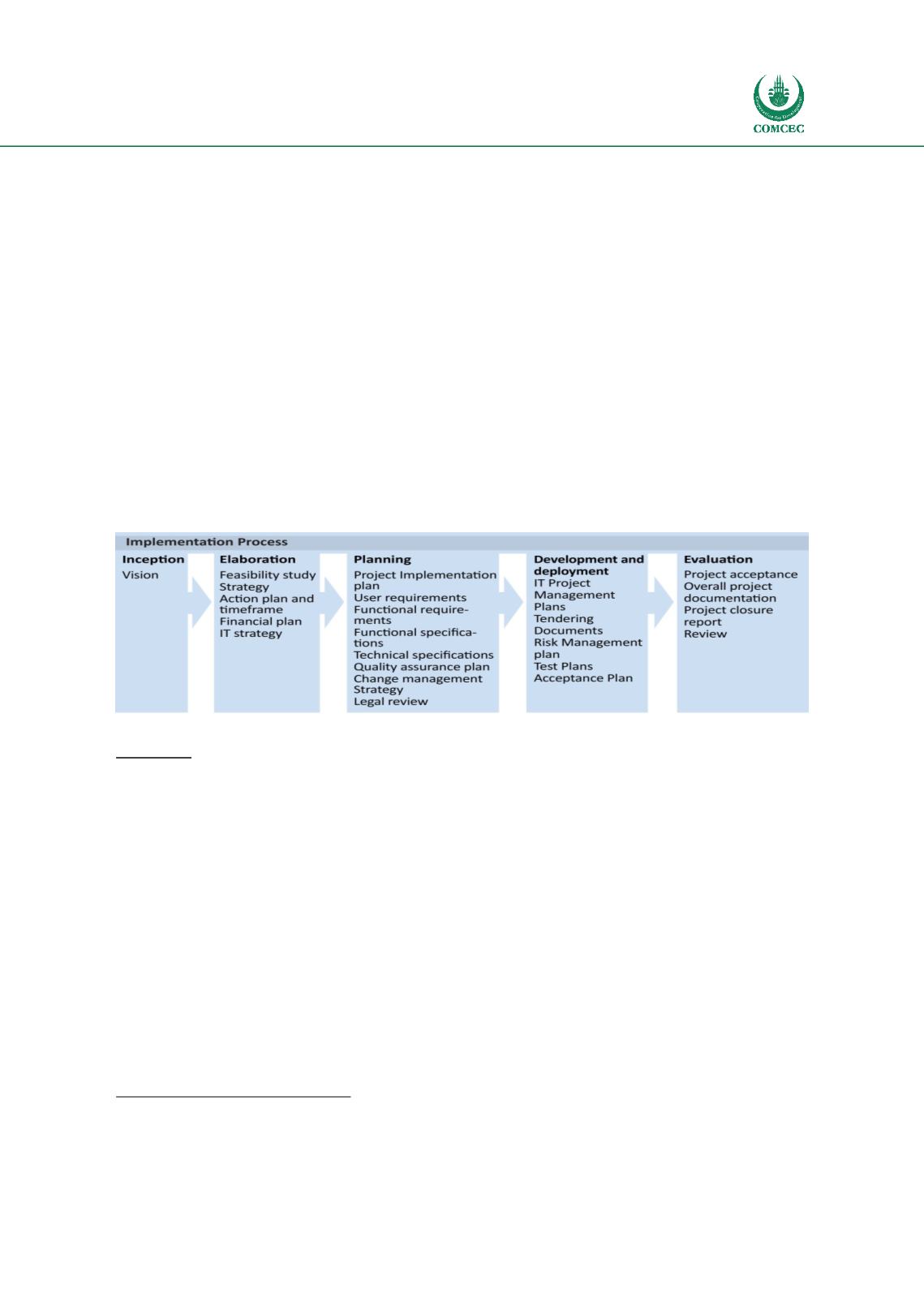
The logical sequence - se
e Figure 8below - includes the following steps: inception; elaboration;
planning; development and deployment; and evaluation and feedback
12
. Throughout the
process many documents are developed that account for activities of each step, so that a logical
flow of documents complements the flow of actions.
Figure 8: Implementation Steps and Related Documents
Source: Authors’ own construction
Inception
The inception phase may also be referred to as setting the agenda and developing a policy
vision. Single Window initiatives are driven by different policy expectations and may be
championed by isolated branches of the government. Customs services, port authorities or
Ministry of Trade/Economy are the most frequent driver of Single Window initiatives.
Through public awareness raising and media coverage, the Single Window is put on the
political agenda and cross-government support is mobilised. A Single Window vision
document may be developed at this stage to spell out in few pages the concept and its expected
benefits. The formal adoption of the vision at the highest level of government authorises and
delegates the development of a Single Window strategy.
12
The naming and grouping of activities follows UNESCAP and UNECE,
Single Window Planning and Implementation Guide
(New York and Geneva: United Nations, 2012) but the substance differs from it and builds on various resources.