



 48 / 176

Improving Banking Supervisory Mechanisms
In the OIC Member Countries
31
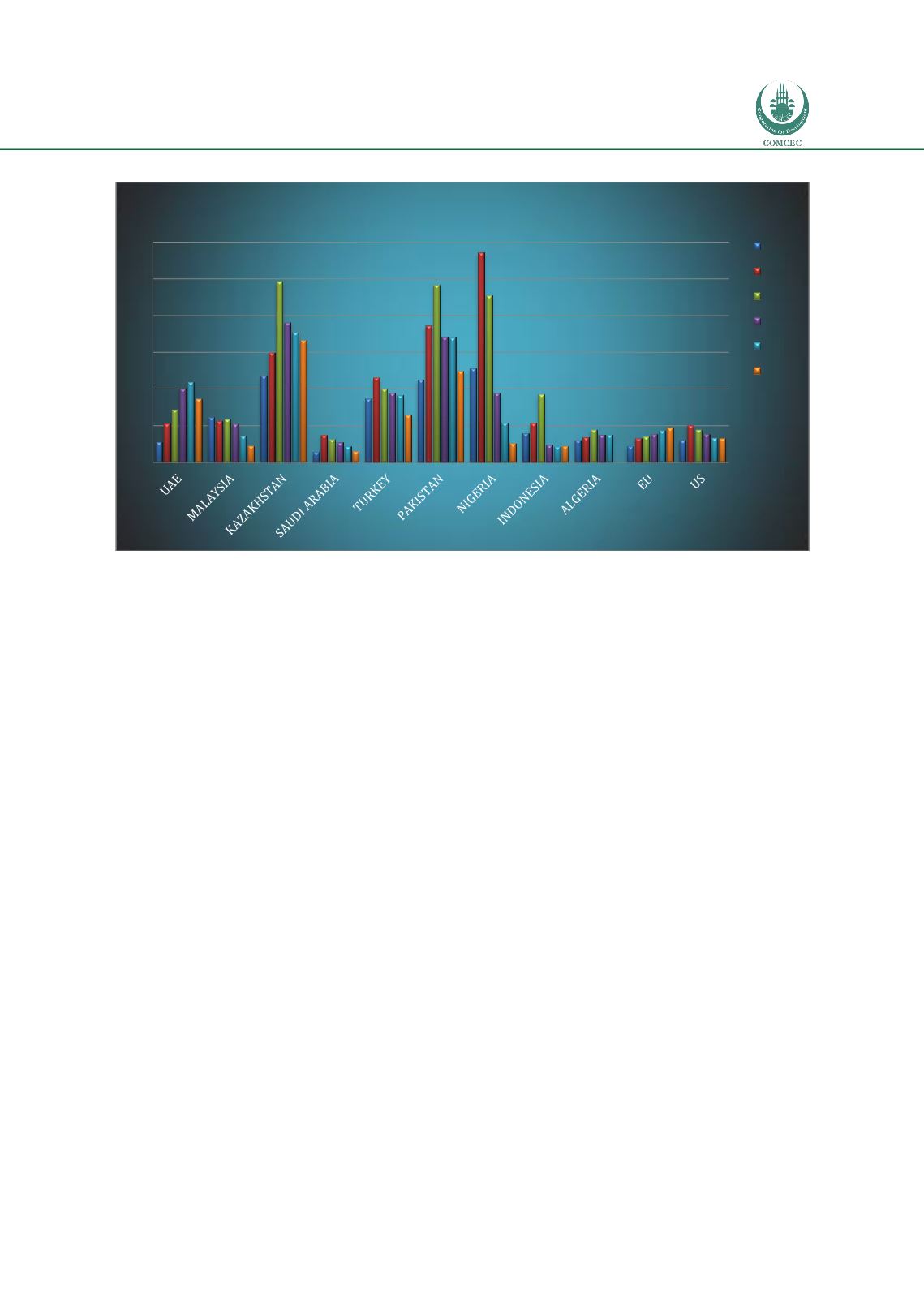
Figure 24: NPL Ratio
Source: Bankscope
Another important measure for the evaluation of the banking sector is the ratio of non-
performing loans. (NPL). For most of the member states, the ratio of NPL’s to total loans
remains below 10% with notable exceptions of Kazakhstan, Nigeria and Pakistan (see Figure
24). In those countries both the level and the volatility of NPL seems to be high. NPL is an
important indicator where high ratios depresses bank profitability and usually lead to further
deteriorations in credit quality. Therefore, high NPL ratio limits the financial intermediation
role of the banks and their ability to raise capital to meet the capital requirements imposed by
the regulatory framework. It is also important to note that NPL ratios increase sharply during
recessions. NPL is in a way a historical measure. More forward-looking measures should be
studied to predict what might happen to the NPL's in the future. Particularly, stronger
collaterals and avoiding concentration risk in lending would be helpful.
The average NPL in OIC member states is around 7%. This is a moderate figure. But it is
important to note that, in 2009 after the financial crisis in US, the NPL figure average was
around 9%. What is critical in this context is to get ready for these types of global or local
shocks. Capital buffers are needed to defend bank runs in these dates. Because of this, a well-
defined stress testing methodology can be applied in OIC member countries.
Loan to deposit ratio is another critical measure for banking deepening and soundness.
Normally, a higher loan to deposit ratio is a good thing for the banking sector development.
However, a very high deposit to loan ratio can be detrimental during a financial crisis. But
majority of the selected OIC member states has a loan to deposit ratio below 100%. This level
does not imply a high level of risk.
0
5
10
15
20
25
30
NPLs/Gross Loans
2008
2009
2010
2011
2012
2013