


 45 / 231

Diversification of Islamic Financial Insturments
31
Corporate Sukuk Issuances
Post the financial crisis, the corporate issuers have relatively been shy of issuing large Sukuk,
with 2016 Sukuk issuances amounting to estimated USD 15.4 billion, a 25.7% decline from the
previous year USD 20.7 billion as reported by IFSB (May 2017).
The downward trend commenced in 2013, starting with the US Federal Reserve’s first
indications in mid-2013, and eventual decision in early 2014, to gradually begin scaling back
its quantitative easing programme, leading to concerns of rising global interest rates; this has
been followed in 2015–2016 with socio-political and macroeconomic challenges in various
regions of the global economy, leading to subdued economic growth performances.
The year 2016 witnessed notable issuances by GCC based banks, who issued tier 1 Sukuk to
comply with Basel III requirements, such as Dubai Islamic Bank (US$500 million), Abu Dhabi
Islamic Bank (US$1,000 million), Noor Bank (US$500 million), and Bank Al Jazira (US$533
million).
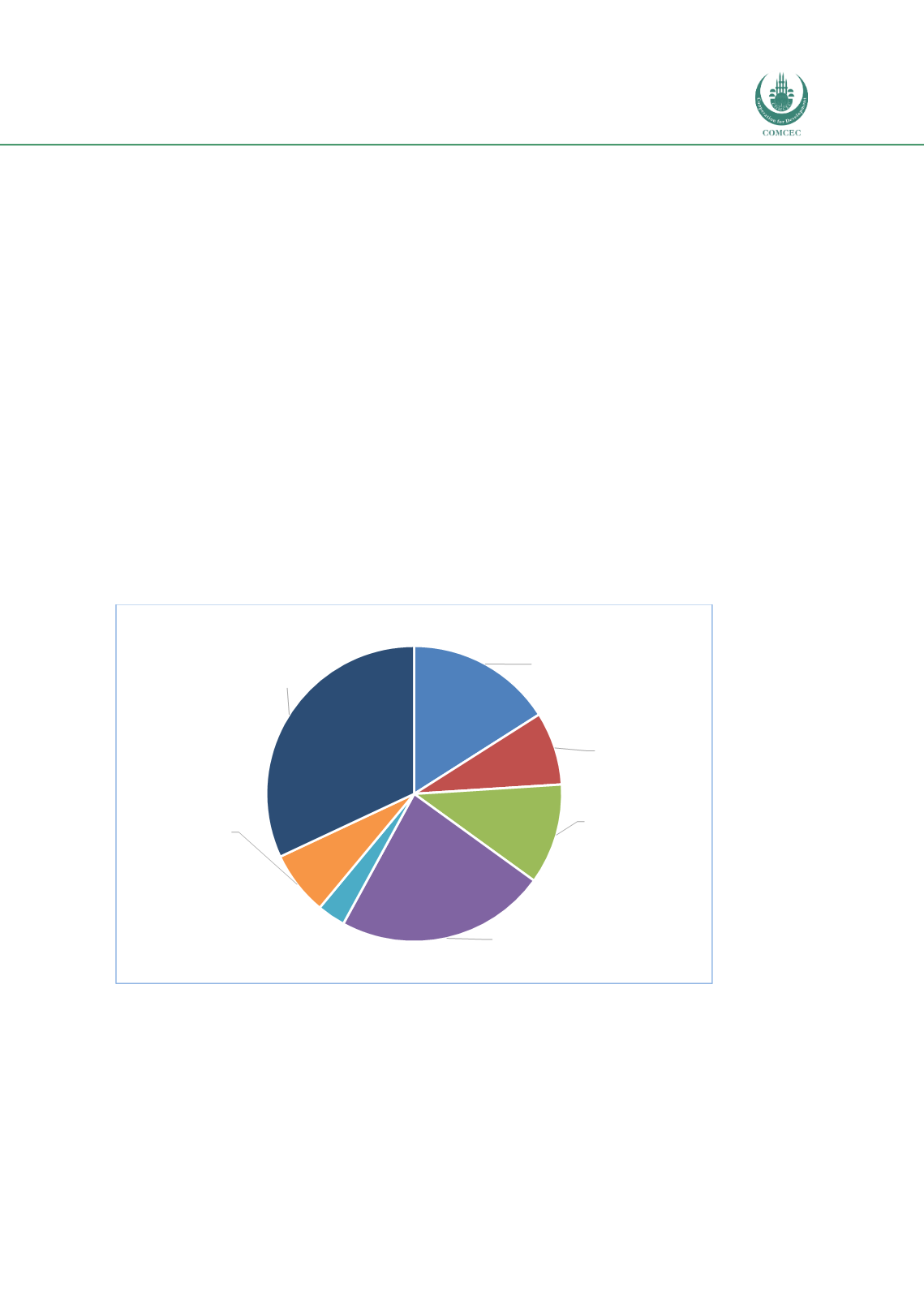
In terms of structure of Corporate Sukuk issuances, Ijarah and Murabaha Sukuk has been
popular over the last decade with almost 55% of all issuances based on these two contracts.
The following table gives a snapshot of the Corporate Sukuks by contract
Figure 5: Corporate Sukuk and Soveriegn Sukuk by Contracts 2001-2016
Source: IIFM 2017
Musharakah; 16%
Murabaha; 8%
Mudarabah; 11%
Wakalah; 23%
Hybrid; 3%
Exchangeable; 7%
Ijarah; 32%