



 120 / 176

Improving Banking Supervisory Mechanisms
In the OIC Member Countries
103
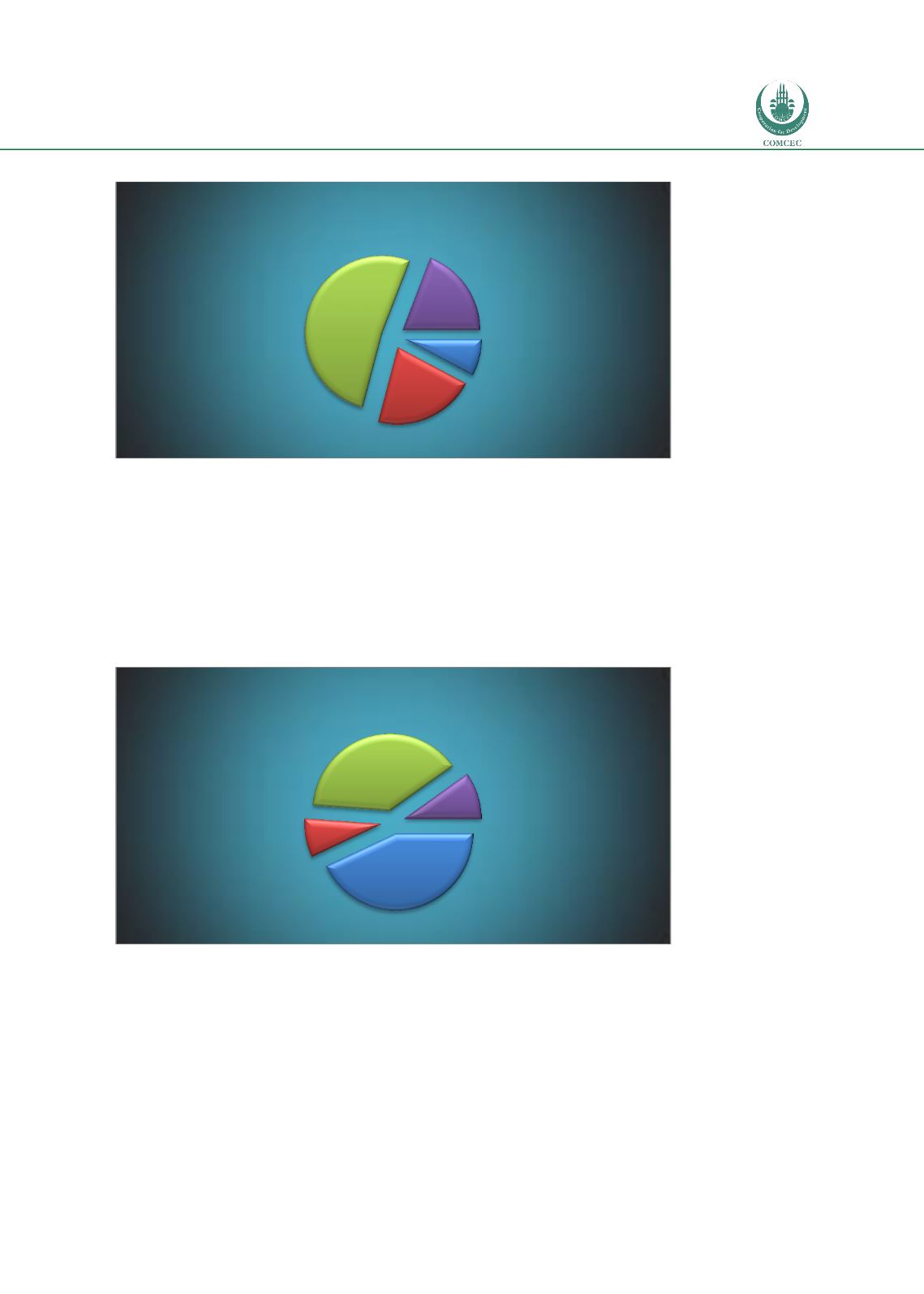
Figure 80: Loan Decomposition, Turkey
Source: Bankscope
o
Pakistan
In Pakistan, we also observe a relatively higher weight of loans in total assets however, it is
coupled with a relatively higher share of securities which is significantly higher than OIC
average. Given the relatively lower fraction of loans in total assets, majority of banking sector
risks stem from credit risk, which is almost uniformly observed for the selected OIC countries.
Banking Sector
Figure 81: Total Asset Decomposition, Pakistan
Source: Bankscope
Similar to other OIC countries, most of the securities are “available for sale” thus contributes to
the overall liquidity of the banking system. Net interest income is the major source of profits
and a very high fraction of liabilities is composed of customer deposits. One important point to
observe is that most of the loans are given as retail which suggests that funds are not
channeled to the real sector in an effective manner and imposes some long-term sustainability
risks for the economy. Loan to deposit ratio is around 60% as of 2013, thus currently does not
impose a significant risk on the economy, even though the loan structure should be closely
monitored.
Residential
Mortgage Loans
(% of G. Loans)
8%
Other Consumer
Retail Loans (%
of G. Loans)
21%
Corporate &
Commercial
Loans (% of G.
Loans)
52%
Other Loans (%
of G. Loans)
19%
Loan Decomposition
Total Securities
43%
Cash & Due
From Banks
8%
Loans
39%
other
10%
Total Asset Decomposition