



 24 / 127

Barriers and Opportunities for Enhancing Capital Flows
In the COMCEC Member Countries
16
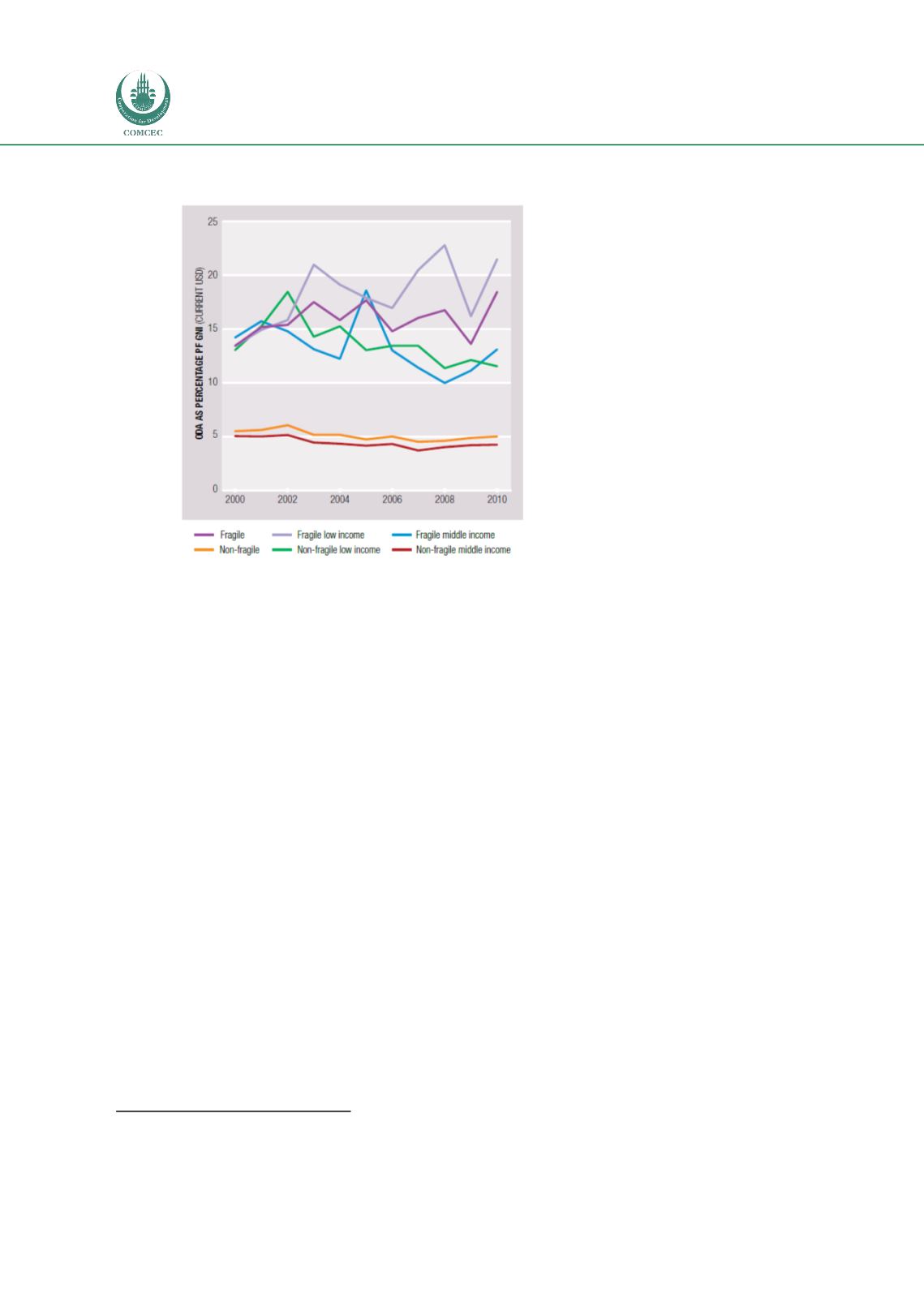
Figure 1.6: Aid dependency in fragile states - ODA as a percentage of GNI, 2000-10
Source: ‘Fragile states 2013: Resource flows and trends in a shifting world’, OECD, 2013
In 2013 and 2014, the EIU believes capital inflows will remain composed of FDI and
medium and long-term debt flows, a large proportion of which is likely to be officially
guaranteed loans such as bilateral assistance.
Lower-Middle Income Countries (LMICs)
17
Assuming FDI as a proxy, capital inflows to most countries in the lower-middle income group
remain subdued; Indonesia stands out as a clear exception, attracting investment largely
thanks to its vast mineral wealth, its major commodity export base and its large, young
population (which totalled 250m in 2013). FDI has consistently formed a significant
proportion of capital inflows since 2006, but the composition of capital flows into LMICs has
begun to shift in the last decade, with portfolio investment and bond issuance growing in
importance (see Figure 1.4).
17
Cameroon, Côte d’Ivoire, Djibouti, Egypt, Guyana, Indonesia, Mauritania, Morocco, Nigeria, Pakistan, Senegal, Sudan, Syria,
Uzbekistan, Yemen