



 29 / 176

Improving Banking Supervisory Mechanisms
In the OIC Member Countries
12
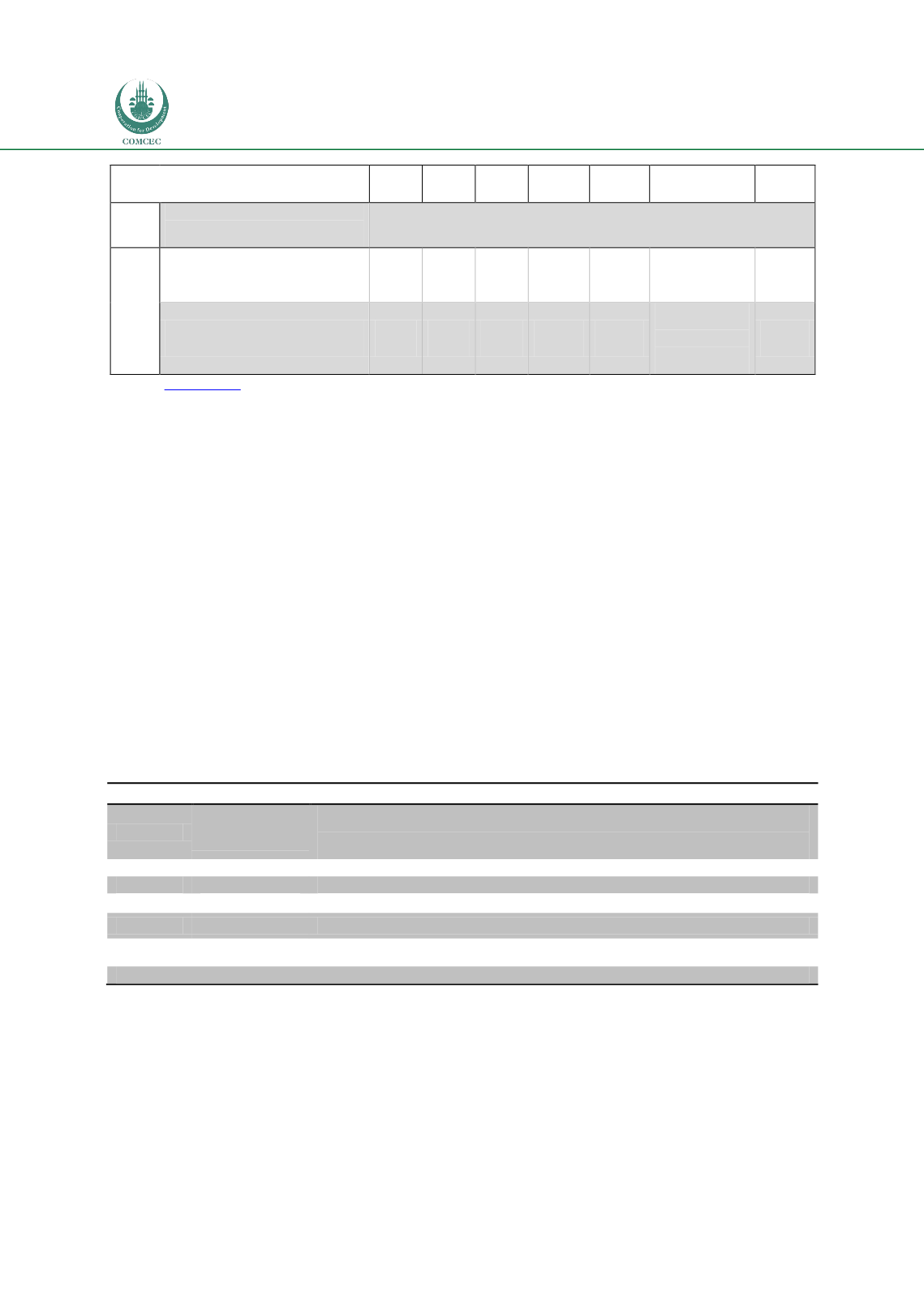
Phases
2013 2014 2015
2016
2017
2018
2019
longer qualify as non-core Tier
1 capital or Tier 2 capital
Liquidity
Liquidity coverage ratio -
minimum requirement
60%
70%
80%
90%
100%
Net stable funding ratio
Introduce
Minimum
Standard
Source
: www.bis.org* Including amounts exceeding the limit for deferred tax assets (DTAs), mortgage servicing rights (MSRs) and
financials.
- -
Transition periods
As can be seen from above, the new financial regulation framework will be much more
different and complex compared to previous regulation.
Systemic Risk Charges:
An additional requirement will be put on banks through their interconnectivity and asset size.
Depending on the size and contagious risks, banks might need to put aside additional capital.
In order to avoid the Lehman Brothers, AIG type big institutions to go bankrupt, BASEL III
requires very big institutions to hold surcharges. The amounts of these additional charges are
summarized below. Systemically important banks are required to hold up to 3.5% additional
capital. Financial Stability Board has determined 29 banks to be qualified as GSIB's. Even
though only 29 banks are considered as GSIB's, domestically big banks will also be required to
hold a stronger capital base. The alternative definition of GSIB is Domestic Systemically
Important Banks (D-SIBs) which is a term used for banks active in less developed countries.
Charging an extra capital for D-SIB's is under discussions in various countries.
Table 3: Systemic Risk Charge under BASEL III
Bucketing Approach
Bucket
Score range*
Minimum additional loss absorbency (common equity as a percentage of
risk-weighted assets)
5 (empty)
D -
3.50%
4
C - D
2.50%
3
B - C
2.00%
2
A - B
1.50%
1
Cut-off Point - A 1.00%
*Scores equal to one of the boundaries are assigned to the higher bucket
Source: BIS
(www.bis.org)
Summary of reforms
Increased overall capital requirement
: Between 2013 and 2019, the common equity
component of capital (core Tier 1) will increase from 2% of a bank’s risk-weighted
assets before certain regulatory deductions to 4.5% after such deductions.