



 28 / 176

Improving Banking Supervisory Mechanisms
In the OIC Member Countries
11
The leverage ratio aims to:
Restrict the build-up of excess leverage in the banking sector to avoid destabilizing the
financial system and the economy;
To simplify the risk-based requirements by switching to a simple, non-risk-based
“backstop” measure
This new ratio ensures both the on- and off-balance sheet assets to be included in the
capital assessment.
Leverage ratio = Capital measure/Exposure measure, where the capital measure for the
leverage ratio is the Tier 1 capital of the risk-based capital framework
A bank’s total exposure measure is the sum of the following exposures: (a) on-balance
sheet exposures; (b) derivative exposures; (c) securities financing transaction (SFT)
exposures; and (d) off-balance sheet (OBS) items.
Consequently, BASEL III, imposes a constraint of 3% on the leverage of banks, i.e. the ratio of
Tier 1 capital to the total exposure of banks to supplement the risk-based capital framework of
BASEL II. The new leverage ratio will be much easier to calculate and will have a simpler logic
than that of right weight calculations.
Timeline: According to BASEL Committee, leverage ratio will be disclosed by 2015.
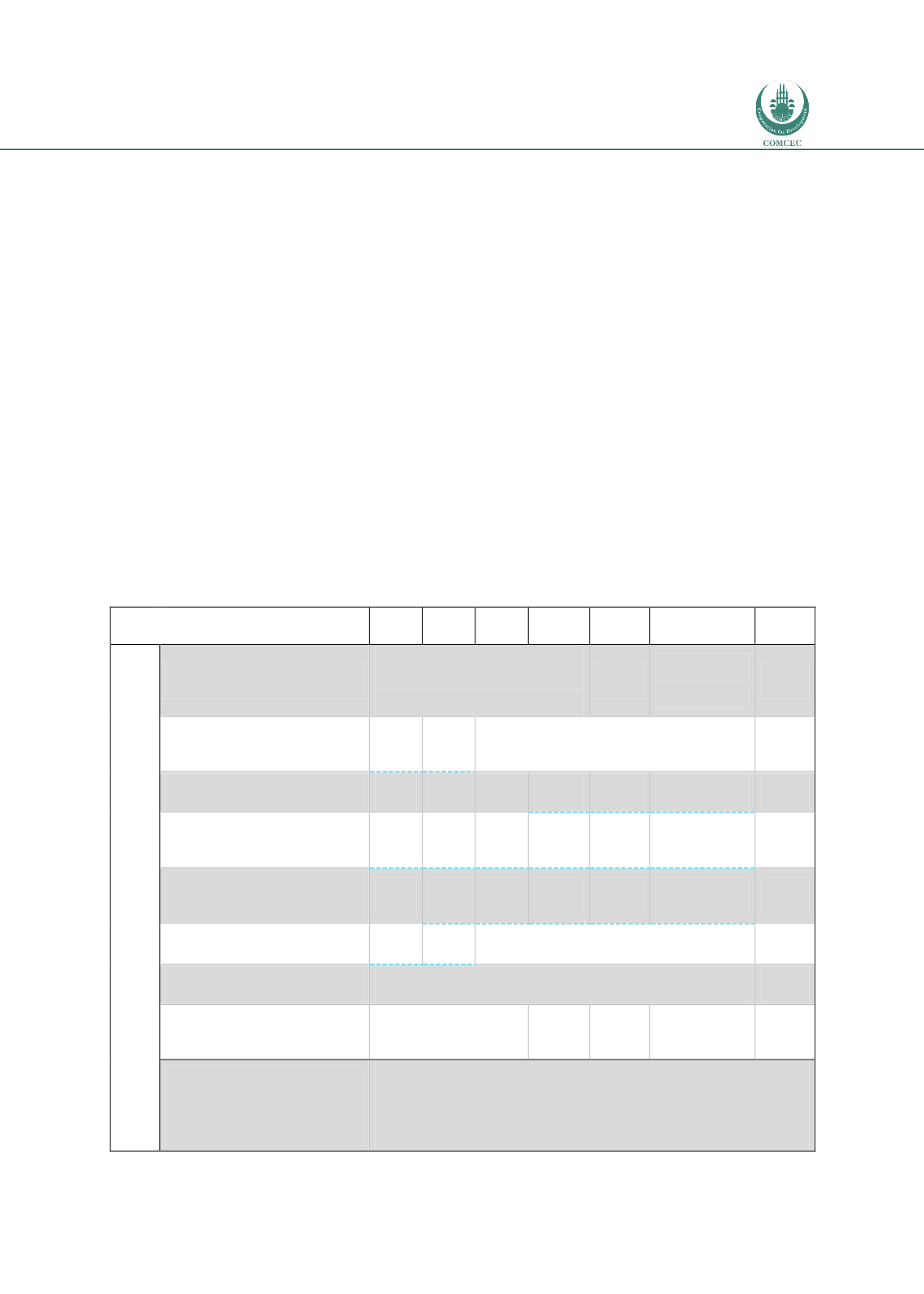
Below is the summary of the new BASEL III requirements and their time table.
Table 2: Time-table for new BASEL III Requirements
Phases
2013 2014 2015
2016
2017
2018
2019
Capital
Leverage Ratio
Parallel run 1 Jan 2013 - 1 Jan
2017
Disclosure starts 1 Jan 2015
Migration to
Pillar 1
Minimum Common Equity
Capital Ratio
3.50% 4.00%
4.50%
4.50%
Capital Conservation Buffer
0.625% 1.250%
1.875%
2.500%
Minimum common equity plus
capital conservation buffer
3.50% 4.00% 4.50% 5.125% 5.75%
6.375%
7.00%
Phase-in of deductions from
CET1*
20%
40%
60%
80%
100%
100%
Minimum Tier 1 Capital
4.50% 5.50%
6.00%
6.00%
Minimum Total Capital
8.00%
8.00%
Minimum Total Capital plus
conservation buffer
8.00%
8.625% 9.25%
9.875%
10.50%
Capital instruments that no
Phased out over 10 year horizon beginning 2013