


 47 / 247

The Role of Sukuk in Islamic Capital Markets
29
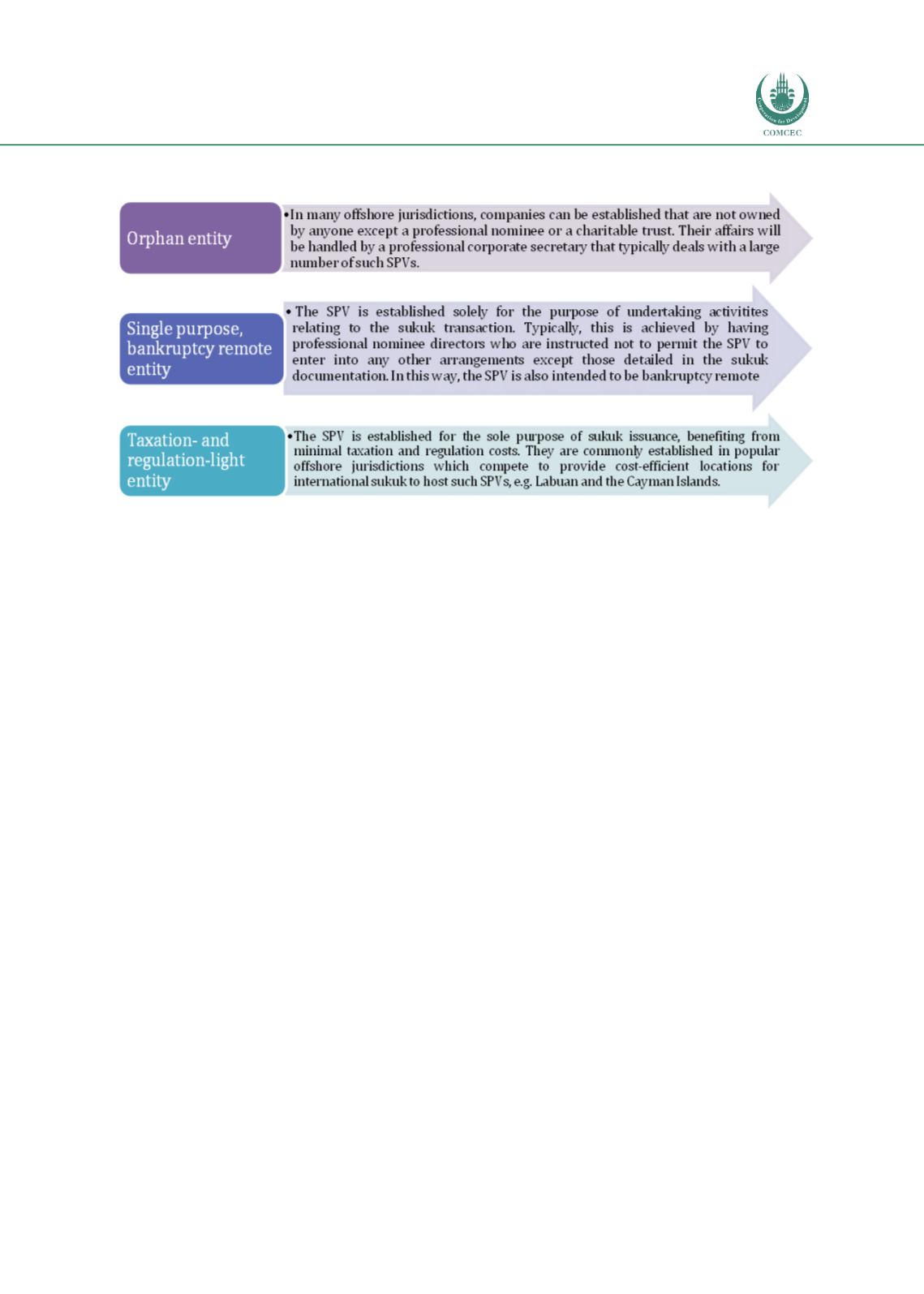
Figure 2.9: Characteristics of SPVs
Source: ISRA (2017)
As mentioned in the earlier sub-section, the predominant structures of sukuk issued in
common law jurisdictions have been based on a trust arrangement via the establishment of an
SPV. Unlike the common law that recognizes the concepts of trust and beneficial ownership,
thus allowing ownership to be held by more than 1 party (legal and beneficial), civil law only
recognizes ownership by 1 party. In such jurisdictions, sukuk, therefore, tend to be issued
through several alternative structures facilitated by the promulgation of local legislation.
Turkey, for example, has passed specific laws that allow the formation of asset-leasing
companies, which are a form of SPV regulated by the Capital Markets Board of Turkey. These
asset-leasing companies are specifically incorporated to enable the issuance of certificates
under the
ijarah
structure to investors which allows the asset-leasing companies to finance the
purchase of the assets and lease them back to the obligor.
Oman is another example, which introduced the concept of financial trust, which is akin to the
common law concept of trust. Under this regulation, a financial trust, created through a trust
instrument, transfers legal ownership of the trust property to the trustee, hence allowing the
SPV to hold the property in trust for the benefit of the sukuk investors (Curtis, 2013). In other
Gulf countries, mechanisms have been developed to replicate security via contractual
arrangements with a ”local security agent”. These agents are usually reputable local financial
institutions but do not have the fiduciary responsibilities required of trustees. Such agents are
also important when purchasing local assets: in many jurisdictions, these assets cannot be sold
to non-nationals (Howladar, 2006).
The Role of the Trustee
As mentioned earlier, the concept of trust has become an important element in sukuk
structuring. The trust in sukuk structures is typically administered by a duly registered trustee
body or corporation, although the sukuk issuer/SPV can appoint itself as the trustee in the
sukuk structure. The trustee’s powers, rights and responsibilities are normally documented in
a trust deed; hence it is the duty of a trustee to use a reasonable degree of skill and diligence in
exercising such rights, powers and responsibilities. The trustee's main function is to protect