


 45 / 247

The Role of Sukuk in Islamic Capital Markets
27
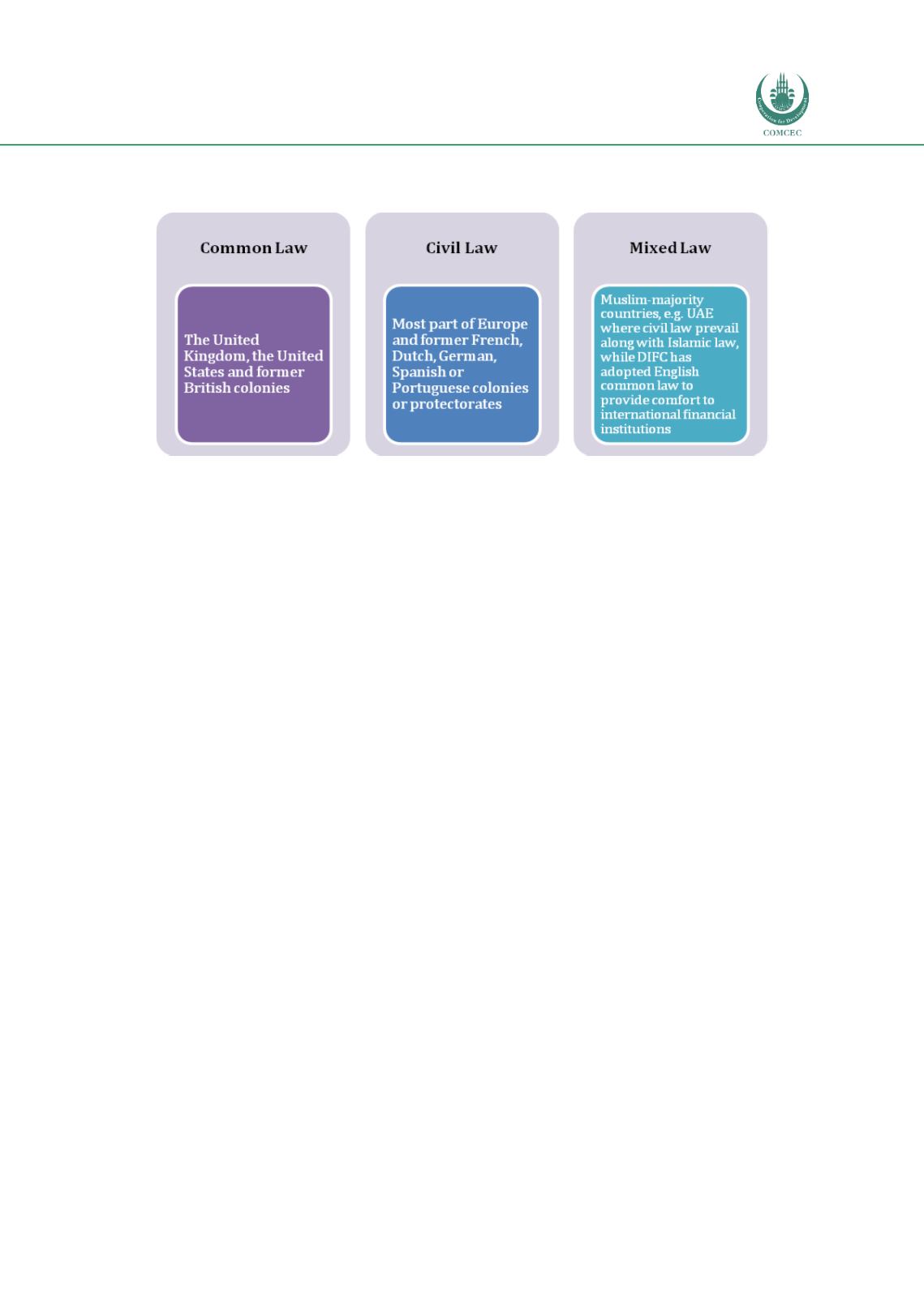
Figure 2.8: Types of Legal Systems and the Adopting Jurisdictions
Source: ISRA
Common Law vs Civil Law – Recognition of Trust Law
One of the key factors that explains the level of financial development in a country is its legal
system, and the adaptability of its laws in response to changing economic circumstances.
Arguably, legal systems based on common law are usually more flexible vis-a-vis evolving and
responding to changing conditions, as rules can be replaced based on the doctrine of
stare
decisis
(i.e. previously decided cases or precedents). Such changes in law would be more
difficult, time consuming and costly under the civil law system, which is based on statutes and
codes promulgated by the legislature and can only be amended by the legislature, introduced
by a formal procedure and considered binding on courts.
The flexibility of the common law system in the face of new cases and its adaptability to new
rules could facilitate the development of Islamic finance. A study by Grassa and Gazdar (2014)
confirms that countries with mixed legal systems based on common law and Islamic law are
favourable to the development of the Islamic finance industry. On the other hand, countries
with mixed legal systems based on civil law and Islamic law are less flexible in making changes
to their old laws, and inevitably hinder the development of Islamic finance. Another study by
Said and Grassa (2013) reveals that countries with mixed common law and Islamic law
systems have developed sukuk markets.
A key legal issue with sukuk concerns the transfer of ownership of the underlying assets to
sukuk holders. Common law jurisdictions recognize the concepts of trust and beneficial
interest, unlike civil law systems,
which only recognize ownership held by 1 party
. For
example, i
n GCC countries that apply civil and Islamic laws, the separation between legal and
beneficial ownership is not recognized. This causes a problem in transferring beneficial title of
the assets from the originator to the SPV ― without perfecting the legal transfer ― under an
asset-based sukuk structure. The implication is that with a real asset transfer on a “true sale”
basis (i.e. transfer of legal title), sukuk investors would have legal recourse over the underlying
assets (asset-backed sukuk) under a default scenario. Otherwise, the investors would only
have recourse against the obligor (asset-based sukuk).
Under asset-based sukuk structures, sukuk ownership takes place through a trust which is
widely used in common law systems. Under a trust arrangement, the SPV purchases the asset