


 104 / 247

83
3.
Asset-Pricing Guidelines on Sale and Purchase Sukuk Structures
The assets (tangible or intangible) used in a sukuk structure must also satisfy the asset-pricing
guidelines. The purchase price for the sale and purchase of an identified asset under the sukuk
structures of BBA,
murabahah
,
istisna’
and
ijarah
must adhere to the following requirements:
3
a)
The purchase price must not exceed 1.51 times the market value of the asset.
b)
In cases where the market value of a particular asset cannot be ascertained, a fair value or
any other value must be applied.
The rationale for the asset-pricing guidelines is to protect investors’ interests so that the
market value of the underlying assets commensurate with the investors’ principal/investment
value. Where there is an unavailability of assets (e.g. unencumbered, insufficient assets to meet
the asset-pricing guidelines, commercial reasons), issuers have the option of utilising any of
the approved platforms to purchase Shariah-compliant assets to facilitate the sale and
purchase requirements under a
murabahah
(via a
tawarruq
arrangement) structure.
Analysis of Sukuk Issuances – Supply (Sell Side)
Since the early 2000s, the private sector has been identified as the country’s economic growth
driver. The privatization of the country’s infrastructure has taken centre stage in building the
base of the country’s capital markets. In 2003, fiscal stimuli were introduced via the annual
budgets for Islamic finance. These have proven successful in incentivising the private sector to
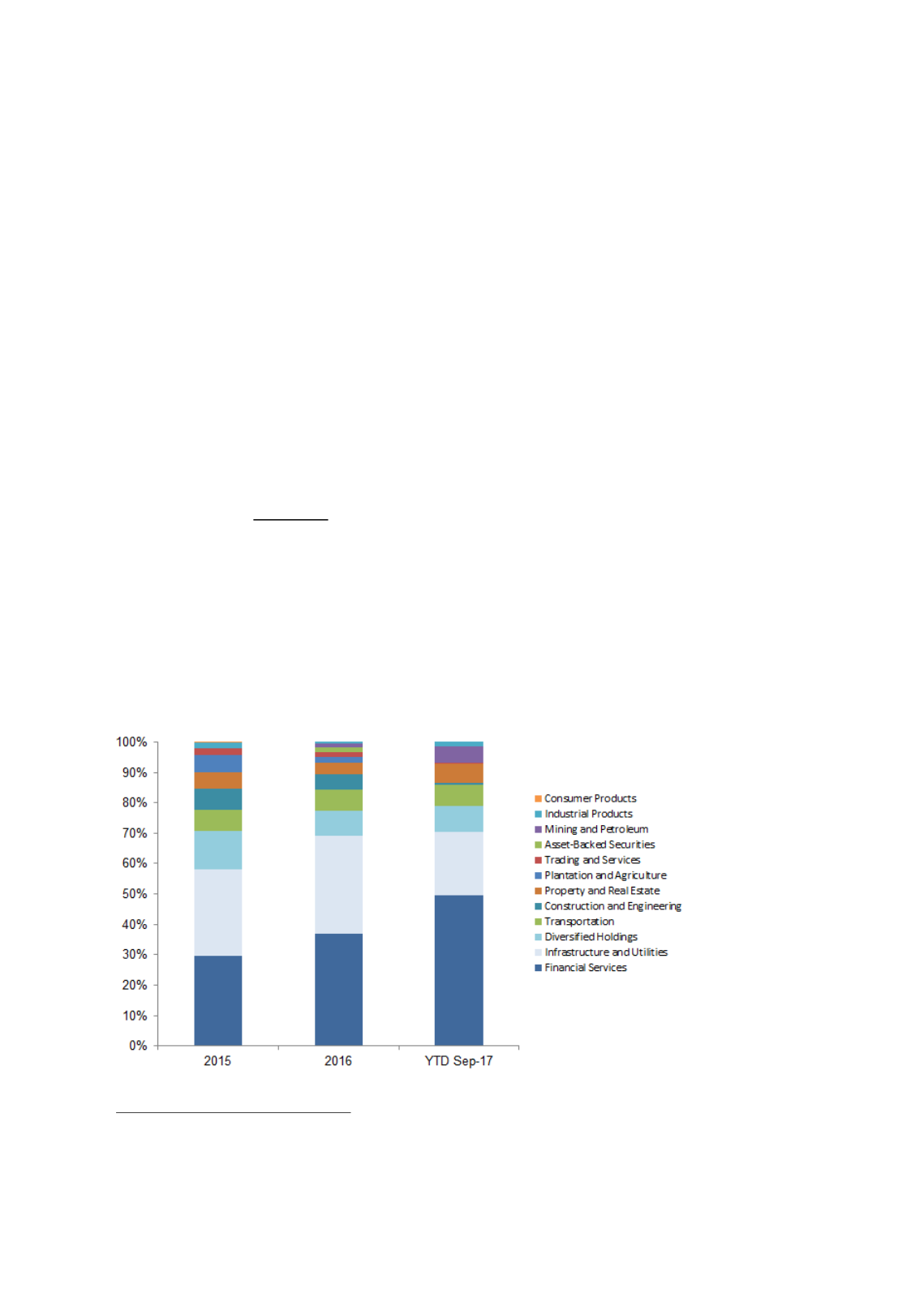
opt for sukuk instead of conventional bonds. As shown in Figure 4.2, the ICM has played host
too many sectors, with financial institutions and infrastructure & utilities claiming a large slice
of the pie due to their sizeable financing amounts.
Figure 4.2: Malaysia’s Corporate Sukuk Issuance by Sector (2015-Sep 2017)
Sources: BPAM, RAM
3
The guideline is not applicable to
ijarah
sukuk that does not involve the sale and purchase of identified assets.