



 76 / 186

Urban Transport in the OIC Megacities
66
development of TransJakarta is more for the reasons of solving transport problems rather than
climate change as a direct objective.
The use of Compressed Natural Gas (CNG) for TransJakarta fleet also positively contributes to the
environment, although the number of the buses fleet is much lower than the total number of private
vehicles and other public transport buses in Jakarta that use gasoline or diesel. Use of electric vehicles
in Jakarta is currently not an option yet as the electricity network and capacity do not support a
smooth supply.
4.1.12. So
c
ial exclusion
4.1.12.1. Ageing population
The world trend of ageing population is not applicable for Jakarta. People in the age category of more
than 65 years account only 3.5% of the total population. However, this group accounts for the highest
%age number of people with mobility limitations. To date, there is no data available about the mobility
pattern of this group which can explain the absence of special policies and facilities for them in the
transport sector. The Government argues that there is too little demand to provide facilities for
disabled people since due to cultural circumstances, they feel ashamed to go out with their wheel
chair.
Only TransJakarta has been trying to provide facilities for disabled people by providing ramps at most
of the stops. Some stops are equipped with lifts, but most of them are not maintained due to ownership
problems. As part of the Standard Operational Procedure, officers of TransJakarta will help if there are
disabled people who want to board the bus. However, these measures are not effective since there is
almost no disabled people who use the bus.
Based on interviews with several experts, the problem lies in the access of disabled people from home
to the public transport stops. Most sidewalks do not have ramps. Therefore, the solution to this
problem is NMT policy.
4.1.12.2. Gender
An estimated 37.5% of all working age women in
Indonesia are engaged in paid work in
Jabodetabek. The physical separation of living
areas from working areas has led to increasing
travel distances with high costs in time and fares.
Given the double burden of earning a living and
caring for the family, the time and reliability of
transport systems is very important to women.
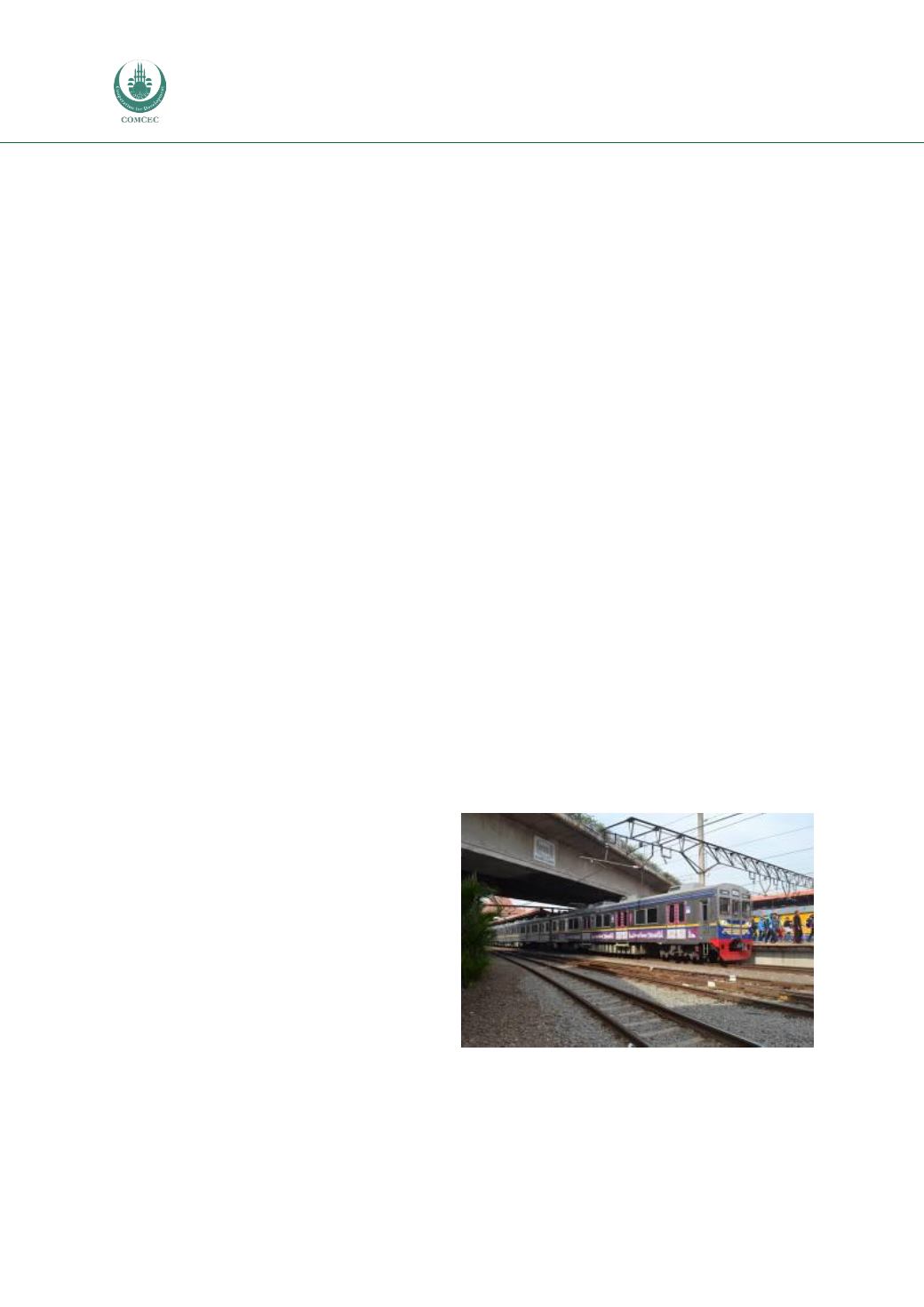
As mentioned before, KRL is the main mode used
by commuters who work in Jakarta and this
mode has introduced special compartments for
women to reduce sexual harassment to women
in public transport. This measure has also been
implemented in TransJakarta especially in the
articulated buses where the front part of the bus
is dedicated for women.
To date, there is no data yet about the rate of sexual harassments on women in public transport. Due
to cultural sensitivity as it is considered as a taboo subject, women who have experienced a sexual
harassment may not have space to complain such circumstances and decide not to report it to the
police (The Jakarta Post, 2014a; The Jakarta Post, 2014b).
Figure 12:A special compartment for women in
the front part of Commuter Rail Line