



 98 / 182

Improving the Role of Eximbanks/ECAs in the OIC Member States
90
financing are transferred to separate funds on the parent company’s balance sheet. The state is
responsible for the losses if they cannot be covered from these funds.
As a small ECA, Finnvera must strike the balance between remaining profitable and ensuring
that its pricing does not make Finnish exporters uncompetitive relative to other countries. It has
a very strong focus on filling the market gaps – both systemic and temporary. As a result, the
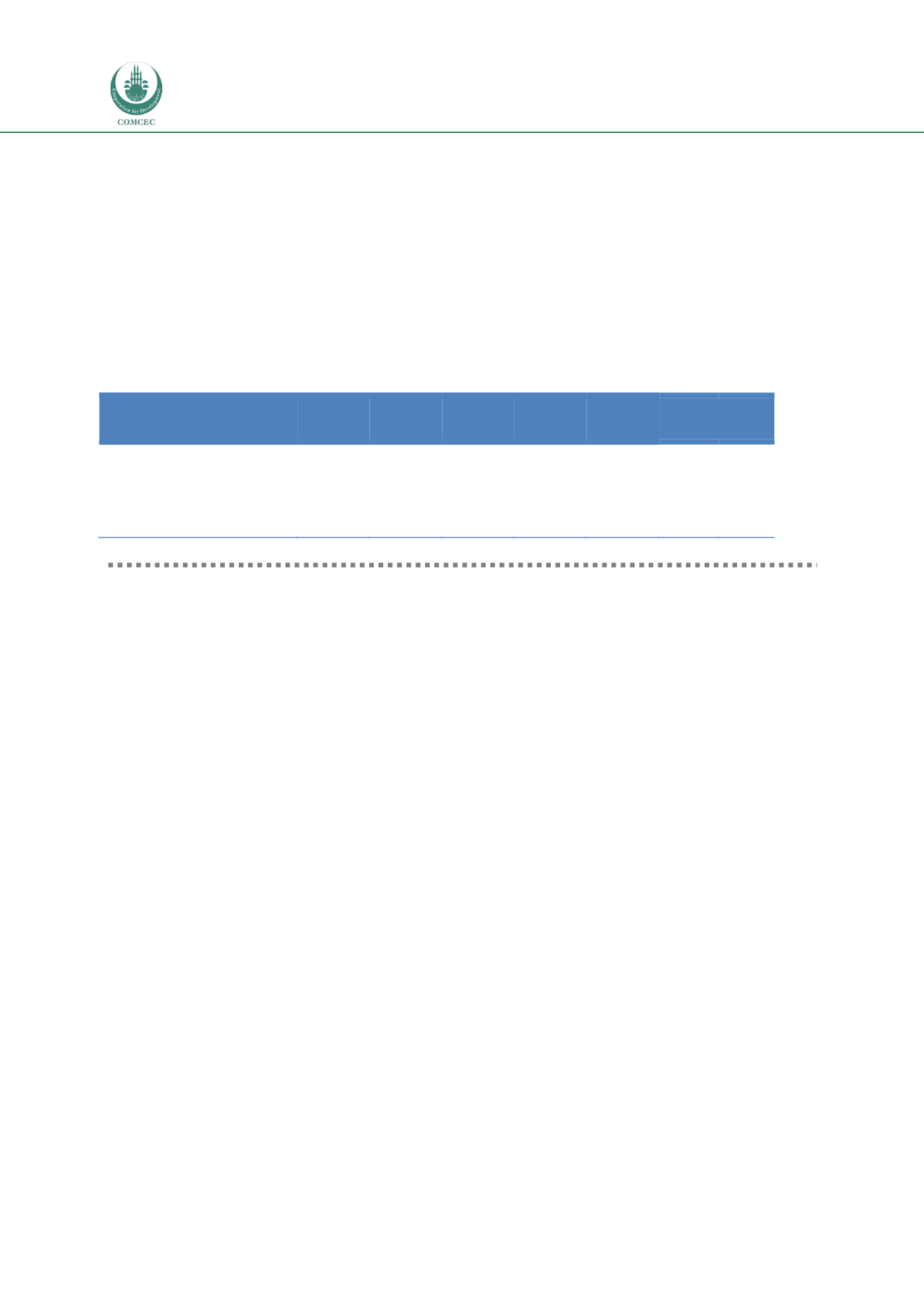
total number and value of guarantees granted vary greatly between 2007 and 2013 as a resulting
of the increased demands for cover during the global financial crisis in 2008 and 2009 as is
depicted in Table 9.
Table 9: Finnvera’s Export Credit Business Volumes (2007-2013)
2007
2008
2009
2010
2011
2012 2013
Export credit
guarantees and special
guarantees offered
(€ mn)
1816.1 6300.8 4449.7 2379.6 3795.7 5351.0 3397.5
Source: Finnvera’s Annual Report, 2014
During the global financial crisis, Finnvera sought and obtained from the European Commission
a waiver to offer short-term credit insurance to what had previously been classified as
“marketable risk” countries but had seen the private credit insurers pull their credit limits
leaving exporters without options. Finnvera was able to ramp up its program quickly and offer
exporters the cover they needed to continue to ship to markets that had been prohibited but that
are the major export markets for Finnish exporters.
Meanwhile, on the medium/long-term export finance side, during the Global Financial Crisis,
banks who had previously been able to provide long term loans to foreign buyers in support of
export transactions by virtue of their ability to borrow in the capital markets, found themselves
unable to access liquidity in the market.