


 22 / 231

Diversification of Islamic Financial Instruments
8
countries (including Bahrain, Malaysia and Iran as the leaders, and Saudi Arabia, UAE, Sudan,
Indonesia, Pakistan, Bangladesh, Jordan, Qatar, Oman, Kuwait etc.) and over 40 non-Muslim
countries including the UK (with London as one of the main Islamic finance centers), USA,
South Africa, Canada, Australia, Switzerland and Sri Lanka), with recent initiatives to launch
Islamic banking in countries like China and Germany. Though it started as an economic need
for faith-based (Muslim) investors, consumers, corporations and governments, today, Islamic
finance is no longer exclusive to Muslims. It is often seen as a form of ethical banking and
investing (with the legal guidelines based on Islamic law) and a possibly stable/less risky
alternative mode of financing by the non-Muslim world. The size and presence of the three
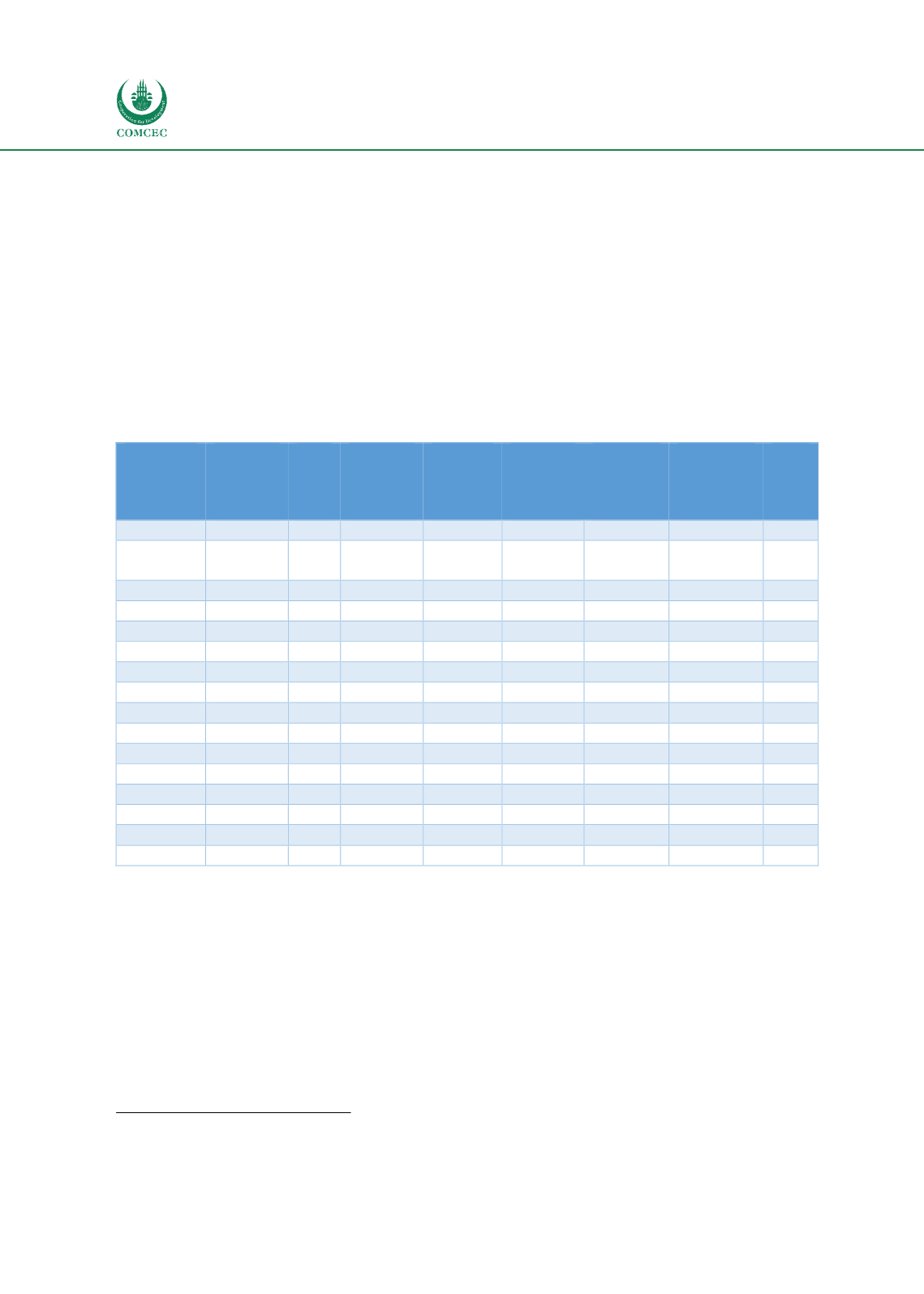
different sectors of the Islamic financial industry is summarized in the table below, as at
December 2015. Countries included in this report (excluding the United Kingdom, Nigeria and
Oman) are highlighted.
Table 4. Size of Islamic Finance Assets
Islamic
Finance
Assets
(US$Mn)
No. of
IFIs
Islamic
Banking
Assets
(US$Mn)
No. of
Islamic
Banks
Windows
Takaful
Retakaful
Assets
(US$Mn)
No. of
Takaful
Retakaful
Operators
Other
Islamic
Institutions’
Assets
(US$Mn)
No. of
Other
IFIs
Global
2,003,542
1,329
1,451,087
480
37745
322
106,351
527
Saudi
Arabia
446,664
127
350,128
16
14206
40
7,991
71
Iran
434,420
131
379,664
42
10502
27
27,574
62
Malaysia
414,343
77
159,986
39
7324
20
39,494
18
UAE
187,051
87
148,187
24
2072
17
5,593
46
Qatar
100,538
37
84,062
8
535
19
734
10
Kuwait
100,361
99
86,153
8
186
15
11,712
76
Bahrain
81,069
64
75,083
36
372
9
795
19
Turkey
51,710
6
41,710
5
1
Indonesia
47,645
138
20,081
33
1269
57
747
48
Bangladesh
26,192
45
25,438
26
669
18
85
1
Pakistan
22,164
69
15,120
23
174
13
2,607
33
Egypt
14,280
31
13,793
13
9
291
9
Sudan
11,110
54
11,010
32
43
14
58
8
Jordan
9,447
13
9,025
4
125
2
168
7
Switzerland
6,937
3
1
6,879
2
Source: Thomson Reuters (2016)
The size of the global Islamic finance industry has traditionally been measured in terms of the
value of assets held by institutions considered as a part of the Islamic finance industry. This
size (June 2016) was estimated at between $1.88 trillion to $2.1 trillion, with the market size
expected to reach more than $3.4 trillion by the end of year 2018
2
. The Islamic banking
industry is typically measured both in terms of the size of its liabilities (deposits) and assets.
However, such figures generally underestimate the size of the industry, as they do not consider
Islamic equities as an asset class. According to the Islamic Financial Services Board (IFSB)’s
annual stability report, the total value of the global Islamic financial market industry was USD
1.88 trillion by the year 2015. The table below shows the breakdown by segments. As the table
2 ‘The Size of the Islamic Finance Market’, June 2016,
Islamicfinance.com.