



 105 / 186

Urban Transport in the OIC Megacities
95
CTA old buses cost 1EGP to use, CTA new buses cost 2 EGP, the Metro costs 1 EGP anywhere (although
during the meetings it was suggested that a zoning system could be introduced to increase revenue).
National policy is now to increase gasoline prices from the current 11EGP (£0.9)/litre. Price is a key
issue for truck and taxi drivers but for many others is not an issue at the moment.
Affordability is the ability to use public transport without significantly affecting the capacity to make
other expenditures of importance under normal living conditions. By keeping all its public transport
fares very low, Cairo has been one of the most successful cities in making its public transport services
affordable, but this has come at a high cost in terms of subsidies, transportation time, pollution and
lack of investment in improved services. It is now questionable whether keeping all fares low but
enduring the consequences of poor quality and inadequate quantity is the best way of making services
affordable to low income groups. Inadequate and congested urban transport is damaging to the city
economy and harms both rich and poor. But the simplistic solution of controlling fares at low levels
for all passengers, is inequitable because it leads to a progressive decline in the quality and quantity
of all public transport services and ineffective because it will tend to generate more congesting car
traffic. Rather the objective of making public transport affordable can be achieved by a more poverty
focused policy.
4.2.12. Human dimension
Many experts argue the existence of informal settlements and modern cities reflect spatial segregation
and socio-economic disparities. The poor are excluded by commercial concerns, which shows that
human dimension is neglected in urban planning and transport policies. If the residents of those
informal settlements had direct access to a reliable and modern public transport system they would
not be dependent on for example micro buses the streets would have less motorized traffic which
eventually could create a more liveable place to live for the residents. Lack of safe and direct walking
routes between places where people live and where they need to work, shop etc create a clear physical
segregation between low-income and high-income areas. The consequences are increased income
equality, higher rates of unemployment and poor health services due to lack of access to job networks
and transportation.
4.2.13. General conditions and problems observed
Detailed site visits were carried out between 18/5/15 to 21/5/15 – photographs were taken and the
key conditions observed included
Chronic Traffic Congestion -
throughout much of the day
:
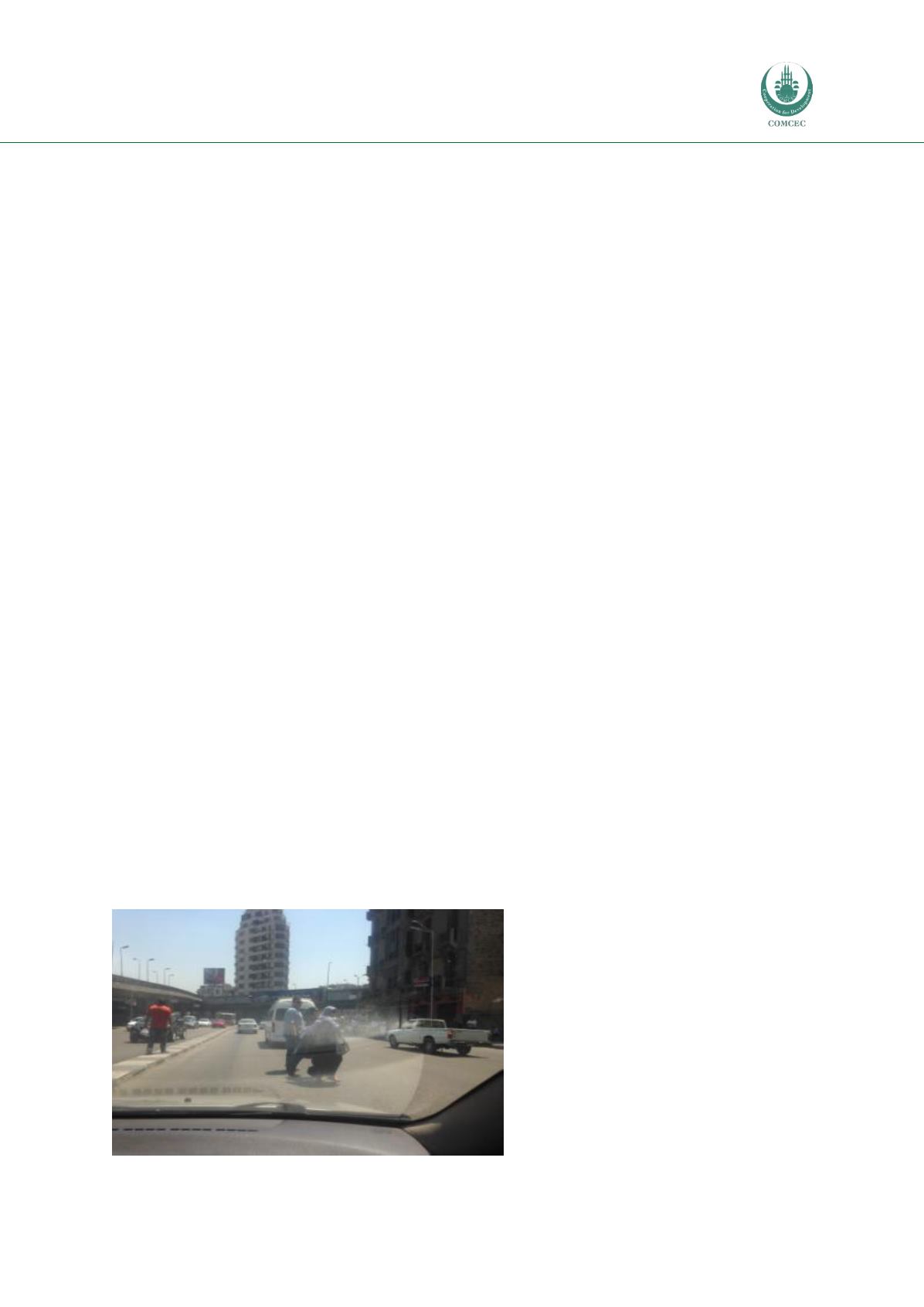
Lack of/poor facilities for pedestrians
– examples are shown in the figures below:
Figure 31: Pedestrians have no crossing facilities provided on very wide roads
Source: Consultant