


 101 / 203

Special Economic Zones in the OIC Region:
Learning from Experience
80
It can be seen that between the establishment of the Beyan Lepas FTZ in the 1970s and the 1990s
there was a very strong growth in enterprises locating within the FTZs of approximately 14%
CAGR. Between the 1990s and 2016 growth in both enterprises and employment has continued
but at a significantly smaller level as the industrial estates reached occupancy and operations
were transformed into higher value added activities away from basic assembly functions.
5.2.5.1
Relationship to Regional and National Economy
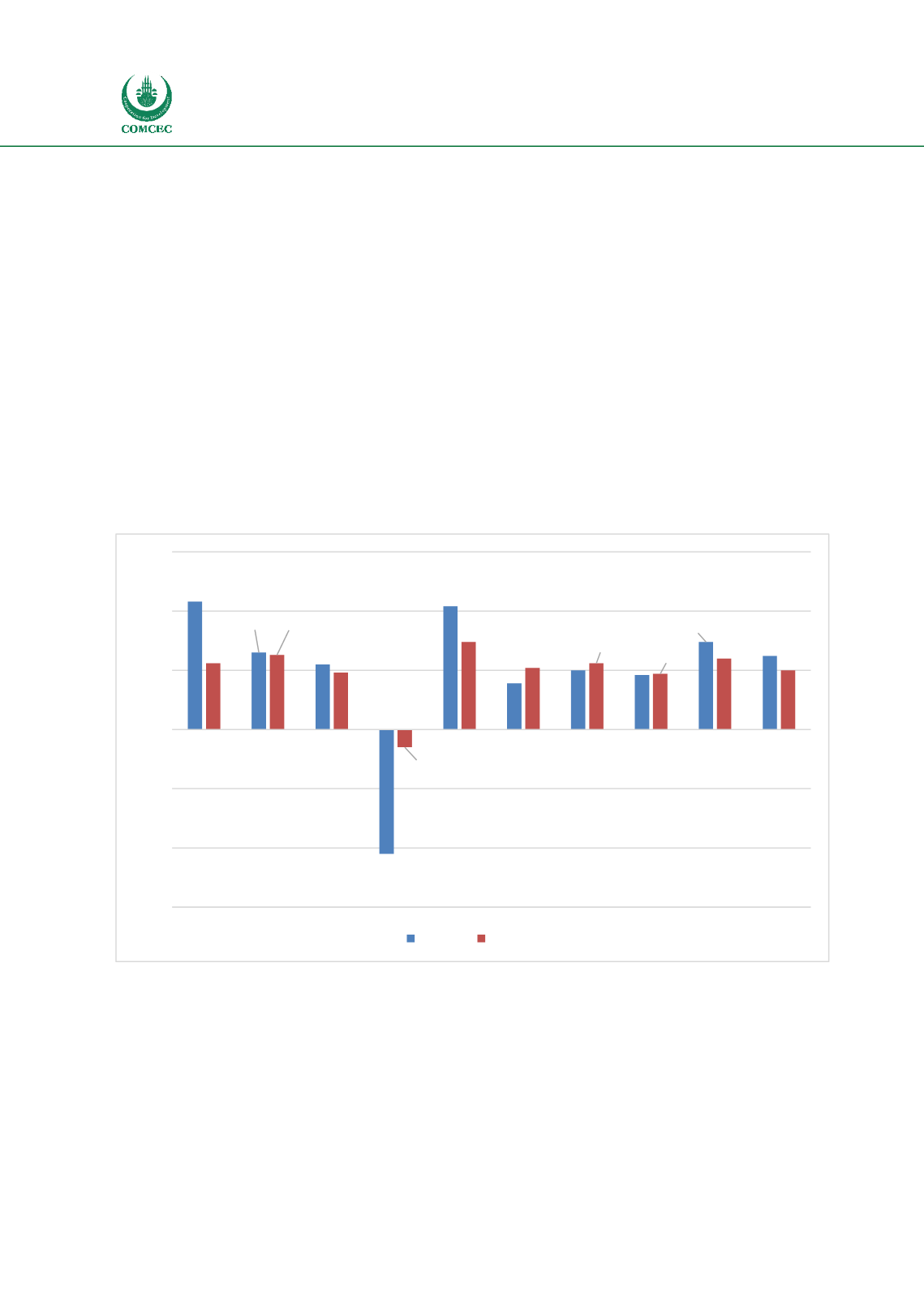
As shown in
Figure 16the Penang economy typically outperforms the national average, but
given its strong dependence on global manufacturing activity there was a sharp downturn in
growth between 2008 and 2009. Following the crisis, Penang’s growth has improved and in
2015 was again outperforming the national average. Penang’s strong manufacturing base
centred on the electronics industries clustered within its FIZs and industrial estates help
support this growth.
Figure 16 - GDP Annual Growth Rates – Penang and Malaysia
Source: Department for Statistics Malaysia. Note: Growth rates for 2006-2010 are based on 2005 constant prices whilst growth
rates for 2011-2015 are based on 2010 constant prices
10.8
6.5
5.5
-10.5
10.4
3.9
5.0
4.6
7.4
6.2
5.6
6.3
4.8
-1.5
7.4
5.2
5.6
4.7
6.0
5.0
-15.0
-10.0
-5.0
0.0
5.0
10.0
15.0
2006 2007 2008 2009 2010 2011 2012 2013 2014 2015
Penang Malaysia