


 75 / 187

Islamic Fund Management
61
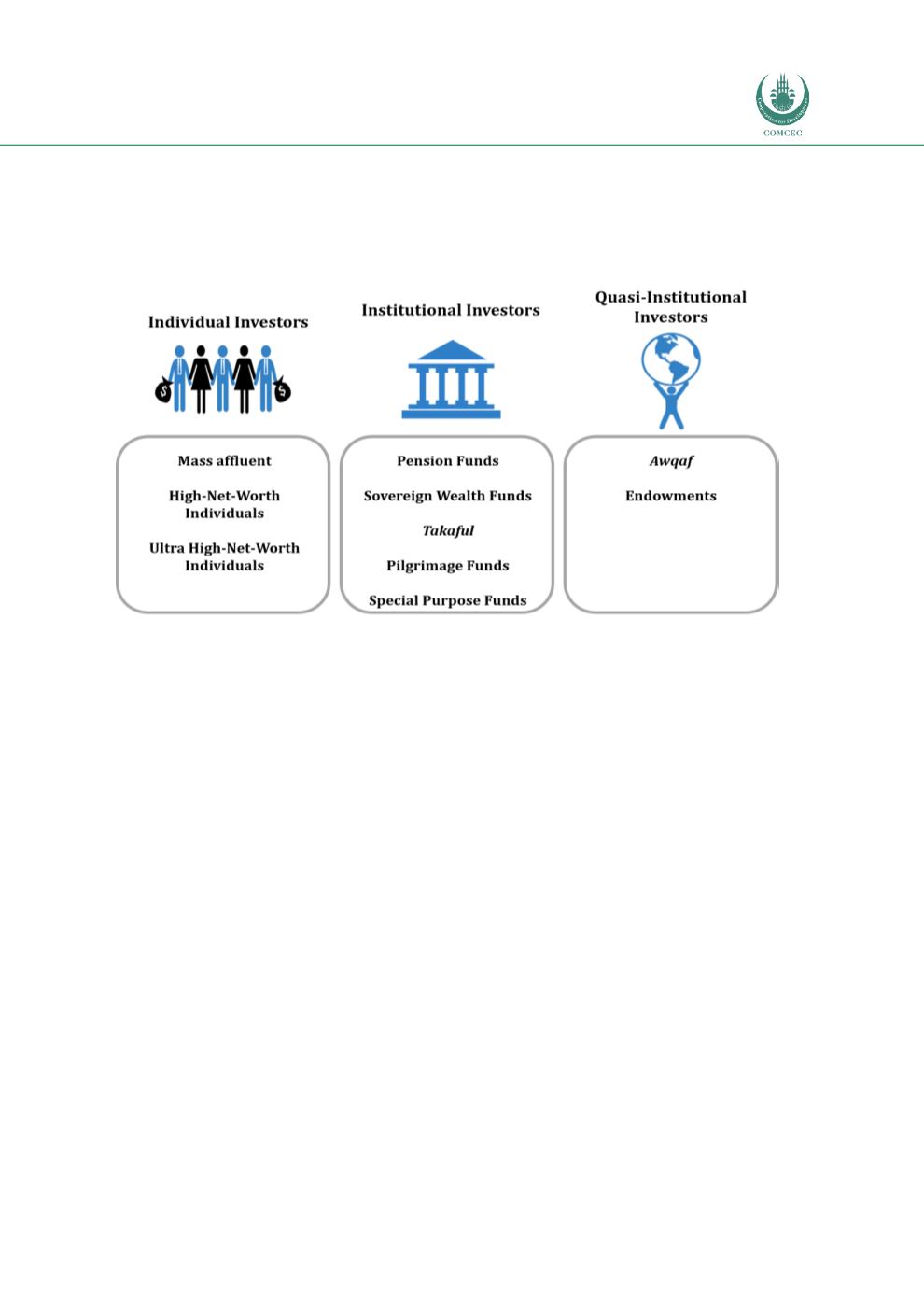
Quasi-institutions, consisting of
waqf
(by definition, Shariah-compliant) and endowments (not
necessarily Islamic), seek long-term capital growth and preservation as well as fund
management. Consequently, they mostly invest in real estate and, to a much smaller extent,
equities (IRTI-UNDP, 2017).
Figure 3.12: Key Investor Profiles in Islamic Finance
Source: IRTI-UNDP (2017), RAM
Based o
n Figure 3.13 ,the growth of Islamic AuM is strong in Muslim-majority countries due to
their demand for Shariah-compliant investments. The level of progress of domicile Islamic
fund management industries, however, depends on the stage of Islamic finance inclusion
within each market. Geographically, Malaysia is the leader in South-East Asia while Saudi
Arabia leads the Middle East. Interestingly, South Africa―despite its small Muslim
population―accounts for 1.9% of global Islamic AuM. South Africa’s matured conventional
market supports greater penetration of Islamic funds from neighbouring African countries,
which have larger affluent Muslim populations.