


 74 / 247

The Role of Sukuk in Islamic Capital Markets
56
Name of
issuance
Zam Zam Tower
Sukuk 2003
SABIC 1 Sukuk
2006
Dubai Islamic
Bank Sukuk
2015
Jordan
Sovereign
Sukuk 2016
Saudi
Sovereign
Sukuk 2017
Maturity
December 2027
First put option on
15 July 2011
n/a
17 October
2021
20 April
2022 and 20
April 2027
Amount
USD 390 million
SAR 3 billion
USD 1 billion
JOD 34 million
USD 9 billion
Periodic
distribution
An internal rate of
return on the
investment at
26%
3-month SIBOR +
40 bps
6.75%
3.01%
2.894% and
3.628%
respectively
Listing
n/a
Saudi Stock
Exchange
Irish Stock
Exchange and
NASDAQ Dubai
n/a
Irish Stock
Exchange
Geographical
distribution
of investors
n/a
n/a
n/a
n/a
n/a
Sources: Bloomberg, Thomson Reuters,
sukuk.comIn developing Arab countries’ sukuk markets, consideration should be given to the large
infrastructure funding gap that has historically been funded by governments and commercial
banks. As Arab governments look into economic reforms (i.e. cut-backs on subsidies and
government spending) the silver lining amid the need to reduce dependency on oil revenue is
the promotion of economic growth through public-private-sector relationships, which will lead
to spill-over effects for the economy (e.g. increased construction activities, manufacturing, and
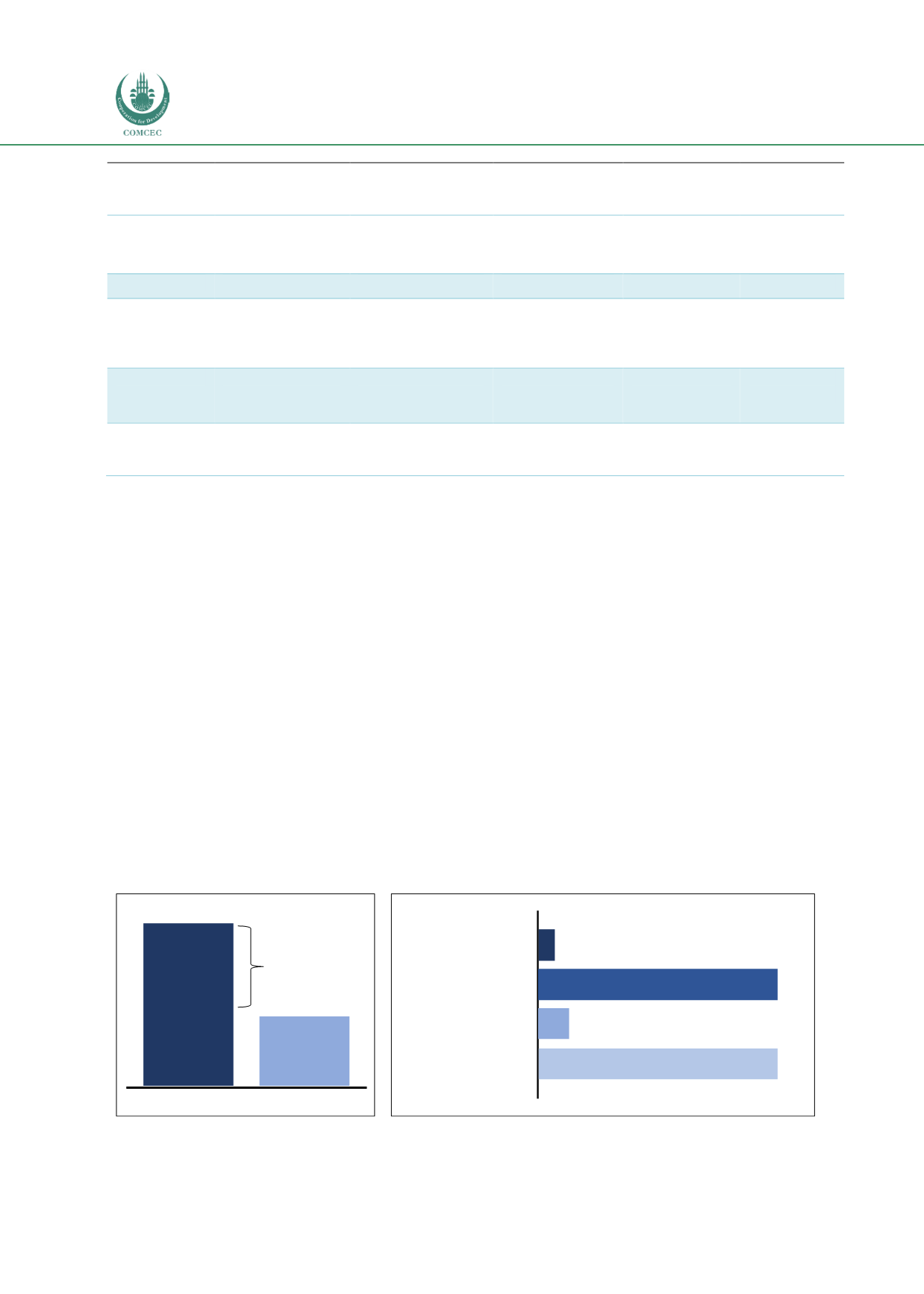
job creation). As depicted in Figure 3.6, Arab countries face an annual USD60 billion funding
gap.
Research shows that the GCC governments are increasingly turning to public private
partnerships (PPPs) to plug the budgetary gaps in public-transport infrastructure
development amid fluctuating oil prices. The 2 key markets generally considered as the most
promising in the near term are Kuwait and the UAE (i.e. Dubai), each of which recently adopted
a legislative framework for PPPs. Saudi Arabia’s government has also decided to implement
several transport infrastructure projects based on the PPP model (Gulf Traffic, 2017).
Figure 3.6: Arab Countries’ Infrastructure Spending
Water and
Sanitation
Transport
Information and
CommunicationsTechnology
5%
Electricity
9%
43%
43%
Annual funding gap of
USD60.0 billion
Investment Requirements Current Spending
USD40.0 billion
USD100.0 billion
Infrastructure financing gaps
Priority sectors for the next 5 years
Source: Arab Monetary Fund Calculation (2016)