



 136 / 247

115
Box 4.6: Size of Selected Asian Debt Markets as at end-2016 (USD billion)
Development of Indonesia’s domestic bond
market
The government and regulators are working
together to develop the domestic bond market, and
have made it a key priority in their capital market
masterplans. The ability to reduce the country’s
reliance on foreign debt holders will reduce the
impact of volatility arising from sentiment-driven
foreign investors. The strategies that have been
successfully implemented include the launch of
government retail bonds in 2006 and the inclusion
of Islamic finance products in 2008. Over the years,
Indonesia’s bond market has grown steadily,
recording USD163.0 billion of outstanding bonds as
at end-2016, mainly comprising government
issuances which accounted for 85% of total
outstanding bonds; the remainder were held by the
corporate sector.
Corporate
bond
market
Government
bond
market
Total
Japan
670.8
8,965.8 9,636.6
China
2,155.0
4,974.0 7,129.0
Korea
1,010.9
702.0 1,713.7
Thailand
81.5
221.5
303.0
Malaysia
119.0
141.2
260.2
Singapore
99.0
137.0
236.0
Hong Kong
97.0
133.0
230.0
Indonesia
23.0
139.0
163.0
Philippines
18.0
80.0
98.0
Vietnam
2.0
42.0
44.0
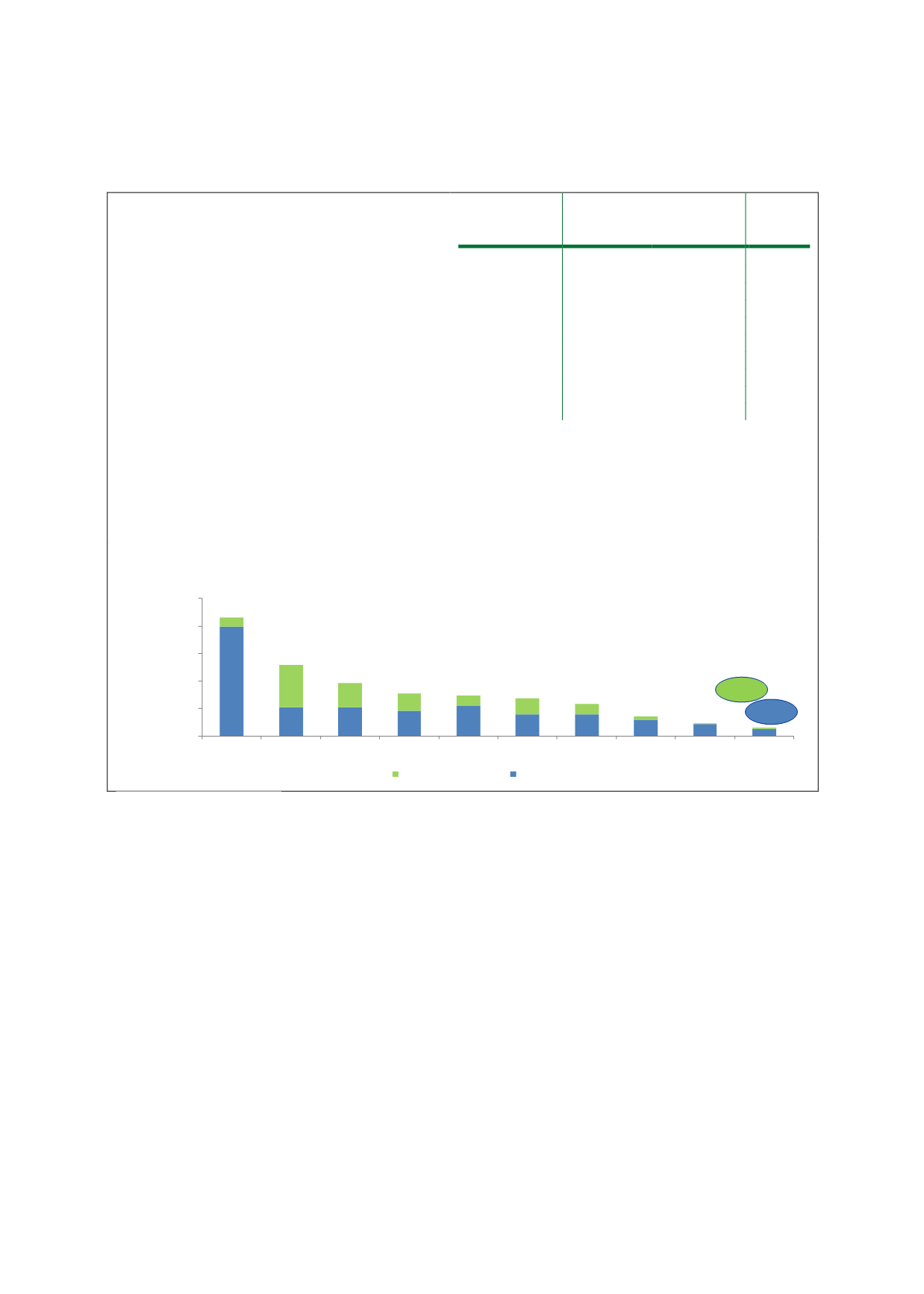
Size of Selected Debt Markets Relative to GDP (as at end-2016)
0.0%
50.0%
100.0%
150.0%
200.0%
250.0%
Japan
Korea Malaysia Singapore Thailand Hong Kong China Philippines Vietnam Indonesia
% ofGDP
Private Sector
Public Sector
14%
85%
Source: Asian Bonds Online
There is a significant difference in the currencies of debt issued by the government as opposed
to corporates. The ratio of domestic debt relative to the government’s total debt has been
trending downwards, from a high of 24% in 2015 to about 17% as at end-June 2017 (refer
Chart 4.31). The government’s aim of refinancing maturing foreign debts by issuing
bonds/sukuk in the domestic market supports the achievement of better pricing benchmarks
in its own currency, a sound balance between foreign and domestic debts, and the
strengthening of the domestic financial market. Meanwhile, Indonesian corporates have
instead relied heavily on FCY bonds to meet their financing requirements (refer to Chart 4.32).